When you look at the label on a bottle of water you see many values: pH, TDS, calcium, magnesium, sodium and more. These numbers describe the water's character: its taste, whether it feels "heavy" or "light", and whether it will leave limescale in your kettle. In this guide we explain the key parameters in plain language and show you how to read a laboratory report.
pH: acidic or alkaline?
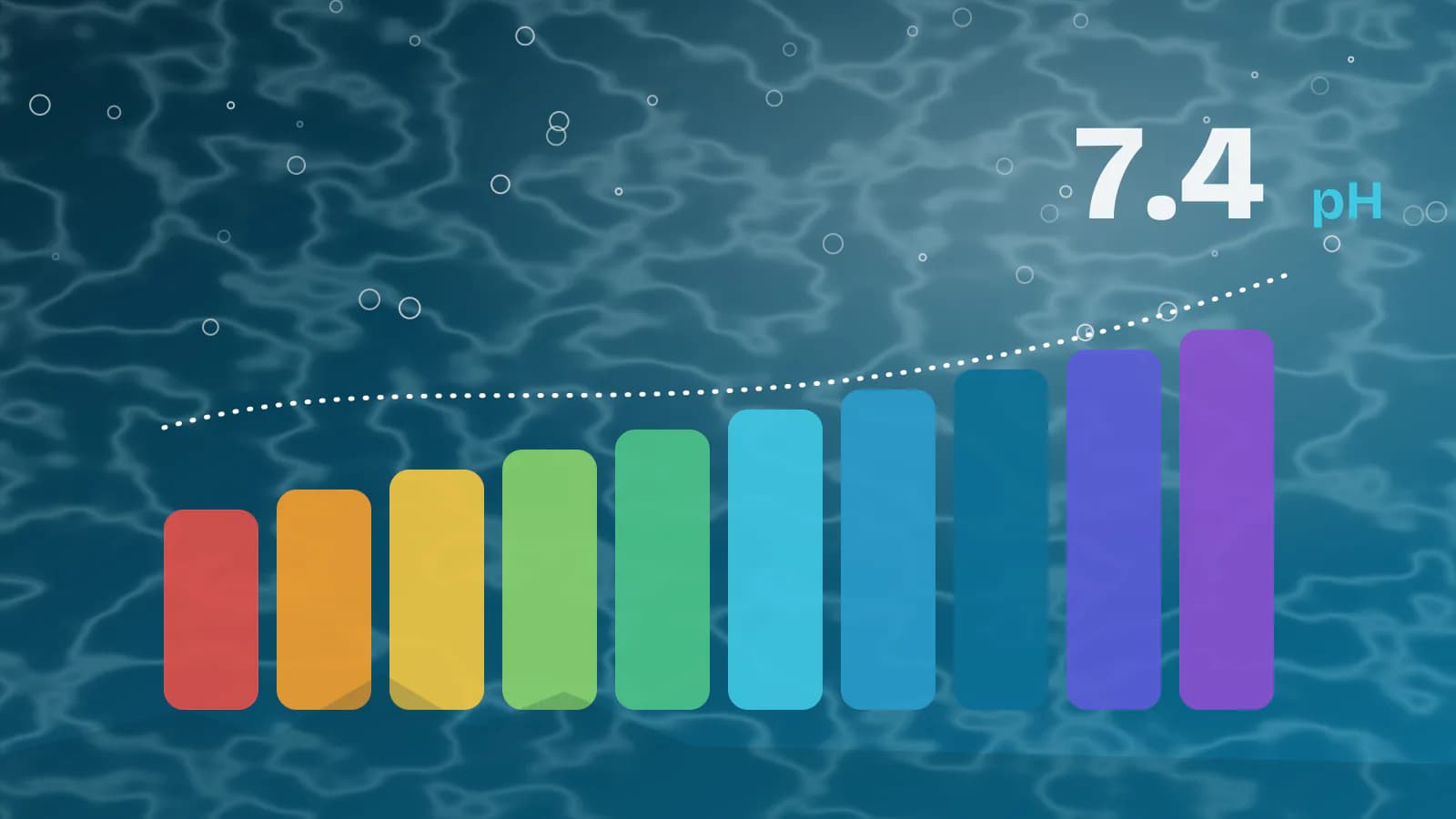
pH shows how acidic or alkaline water is on a scale from 0 to 14. Seven is neutral; below 7 is acidic and above 7 is alkaline.
- For drinking water, the generally accepted range is roughly 6.5 – 9.5. National standards such as TS 266 and World Health Organization (WHO) guidance use this band as a reference.
- Spring water filtered through limestone layers is usually slightly alkaline (around 7.2 – 7.8), because it carries bicarbonates dissolved from the rock.
- pH alone is not a measure of "healthy water"; it is one of the parameters showing that the water is balanced and within standards.
TDS: how many minerals are in the water?
TDS (Total Dissolved Solids) is the total amount of minerals and salts dissolved in one litre of water, usually given in mg/L.
| TDS range (mg/L) | General character | |---|---| | Below 50 | Very low mineral content, "soft" taste | | 50 – 250 | Low to medium minerals, light taste | | 250 – 500 | Medium minerals, distinct taste | | Above 500 | High mineral content |
Which range is "best" is a matter of personal preference. Low-TDS waters taste light, while medium-TDS waters feel fuller. A closely related parameter is electrical conductivity (µS/cm): the more dissolved ions in the water, the higher the conductivity.
Hardness and French degrees (°f)
Water hardness comes from dissolved minerals, mainly calcium (Ca) and magnesium (Mg). In Turkey and Cyprus hardness is often expressed in French degrees (°f, Fr°); 1 °f corresponds to about 10 mg of calcium carbonate per litre.
- 0 – 7 °f: very soft
- 7 – 15 °f: soft
- 15 – 30 °f: moderately hard
- Above 30 °f: hard
Hard water is not a health concern, but it leaves more limescale in kettles and coffee machines.
Other values on the label
- Sodium (Na): Important for people watching their salt intake. Low-sodium waters usually say so on the label.
- Bicarbonate (HCO₃): Gives water a smooth, slightly sweet taste; it is high in limestone springs.
- Chloride (Cl) and sulphate (SO₄): At high levels they can make water taste salty or bitter.
- Nitrate (NO₃): An indicator of agricultural influence; lower is preferable.
- Fluoride (F): Can occur naturally in small amounts; drinking water standards set an upper limit.
How to read a lab report
- Laboratory and date: Check that the report comes from an accredited laboratory and that the sampling date is recent.
- Value and unit: Every parameter should be shown with its unit (mg/L, µS/cm, °f).
- Legal limit column: Confirm that each measured value is below the limit set by the standard.
- Consistency: Comparing reports from several periods, rather than a single one, shows how stable the source is.
At Girne Su we publish our current and past laboratory reports on our water quality page. You can compare the values yourself and ask us about any parameter you are curious about.
Conclusion
pH describes balance, TDS describes mineral density and hardness describes the tendency to form limescale. Once you know these three values, the numbers on the label tell a meaningful story. And when you have found the water you like, placing an online order takes just a few minutes.
- #pH
- #TDS
- #su kalitesi
- #analiz